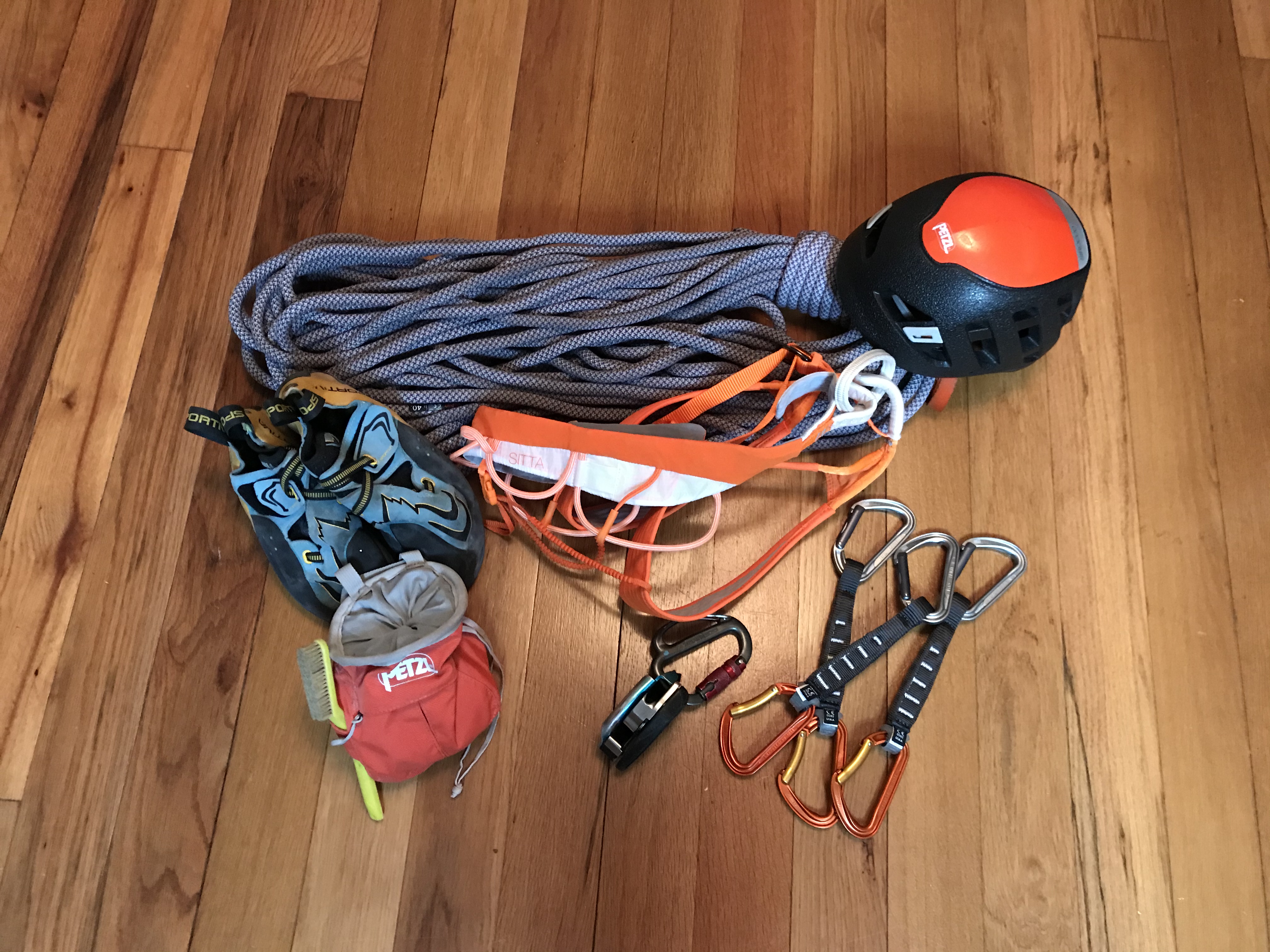
One of the appealing aspects of indoor climbing is the minimal gear requirement. A first-time visitor to any bouldering gym in Singapore needs only two things: climbing shoes and chalk. For rope climbing (top-rope, lead, or auto-belay), a harness and belay device enter the picture. Everything beyond that is optional personal preference.
Climbing Shoes
Climbing shoes are the single most impactful piece of equipment for any indoor climber. Unlike regular athletic shoes, climbing shoes have a thin, sticky rubber sole (typically made from a proprietary compound such as Vibram XS Grip2 or Unparallel RH) that maximizes friction against plastic holds and textured wall surfaces.
Choosing a First Pair
For beginners, a flat or slightly downturned shoe in a neutral profile offers the best balance of comfort and performance. Aggressively downturned shoes are designed for steep overhangs and small footholds, but they cause significant discomfort and provide no advantage on easier routes where most new climbers spend their time.
Popular beginner models include the La Sportiva Tarantulace (lace closure, FriXion RS rubber, approximately S$120 to S$140 in Singapore), the Scarpa Origin (Velcro closure, around S$130), and the Black Diamond Momentum (moderate stiffness, around S$110 to S$130). All three are widely available at local outdoor retailers such as Campers Corner and Togoparts.
Sizing
Climbing shoes should fit snugly without causing sharp pain. Toes should be in contact with the front of the shoe but not curled aggressively. A common mistake among new climbers is buying shoes that are far too tight under the assumption that tighter always equals better performance. For sessions lasting one to two hours at a beginner level, moderate tightness is sufficient.
Rent or Buy?
Shoe rental at Singapore gyms typically costs S$4 to S$6 per visit. The rental shoes are functional but tend to be worn, stretched, and less hygienic over time. Climbers who visit a gym more than twice a month generally find that owning a pair becomes more economical within two to three months. At S$5 per rental and two sessions per week, that amounts to S$40 monthly, meaning a S$120 shoe pays for itself in roughly three months.
Chalk and Chalk Bags
Climbing chalk is magnesium carbonate, the same compound used in gymnastics. It absorbs moisture from the hands, increasing friction and reducing the chance of slipping off holds. Singapore's consistently high humidity (averaging 80 to 84 percent year-round) makes chalk particularly important. Hands sweat more in humid conditions, and many climbers find they re-chalk every two to three moves on harder problems.
Types of Chalk
- Loose chalk: The most common form. Comes in bags or tubs and is applied by dipping hands into a chalk bag clipped to the waist or placed on the ground. Cost: approximately S$8 to S$15 for a 100g to 200g bag.
- Chalk balls: A mesh pouch filled with chalk. Less messy than loose chalk and preferred by some gyms. Around S$6 to S$10 each.
- Liquid chalk: A suspension of magnesium carbonate in alcohol. Applied as a base layer before using dry chalk on top. Particularly effective in humid climates. S$12 to S$22 per bottle. Brands like FrictionLabs and Mammut produce well-regarded formulations.
Chalk Bags
A simple chalk bag costs S$15 to S$35 and clips onto a waist belt or sits on the ground near the wall. For bouldering, many climbers prefer a larger bucket-style bag (S$30 to S$60) that stands upright on the floor and accommodates both hands simultaneously.
Harness
A climbing harness is necessary for rope-based climbing: top-rope, lead, and auto-belay systems. It is not used in bouldering. The harness wraps around the waist and thighs, distributing fall forces across the body through a belay loop where the rope attaches.
Key Features for Beginners
- Padded waist belt and leg loops for comfort during extended hanging or resting
- Adjustable leg loops to accommodate different clothing layers
- Four gear loops (not immediately necessary for gym use, but standard on most models)
- A belay loop rated for climbing loads (minimum 15 kN per UIAA/CE standards)
The Black Diamond Momentum harness (around S$85 to S$100) and the Petzl Corax (around S$75 to S$90) are commonly recommended entry-level options available in Singapore.
Rent or Buy?
Many rope-climbing gyms include harness rental in the day pass price or charge a nominal S$4 to S$6 fee. For climbers rope-climbing once a week or more, purchasing a harness becomes practical after two to three months of consistent sessions.
Belay Device
A belay device manages rope friction, allowing one climber to safely control the rope for another. Gyms with auto-belay systems do not require personal belay devices, but top-rope and lead climbing do.
Assisted-Braking Devices
The Petzl GriGri (approximately S$150 to S$170 in Singapore) is the industry standard. It features a cam mechanism that automatically locks the rope if the belayer's brake hand releases, providing an additional layer of safety. The device works with rope diameters from 8.5 mm to 11 mm.
Tubular Devices
The Black Diamond ATC (around S$30 to S$40) is a simpler, lighter option. It relies entirely on the belayer's technique for braking force. While effective in trained hands, it lacks the automatic-assist feature. Many climbing instructors prefer that students begin on a tubular device to build proper belaying habits before transitioning to a GriGri.
Cost Summary for Singapore
| Item | Approximate Cost (SGD) | When to Buy |
|---|---|---|
| Climbing shoes (beginner) | S$110 to S$140 | After 4 to 6 gym visits |
| Chalk bag + chalk | S$20 to S$35 | Immediately (low cost) |
| Liquid chalk | S$12 to S$22 | After deciding climbing is ongoing |
| Harness | S$75 to S$100 | When rope climbing regularly |
| Belay device (assisted) | S$150 to S$170 | After completing belay certification |
| Belay device (tubular) | S$30 to S$40 | During belay certification course |
Total initial outlay for a bouldering-only setup: approximately S$130 to S$175. For a full rope-climbing setup: S$280 to S$450.
What You Do Not Need
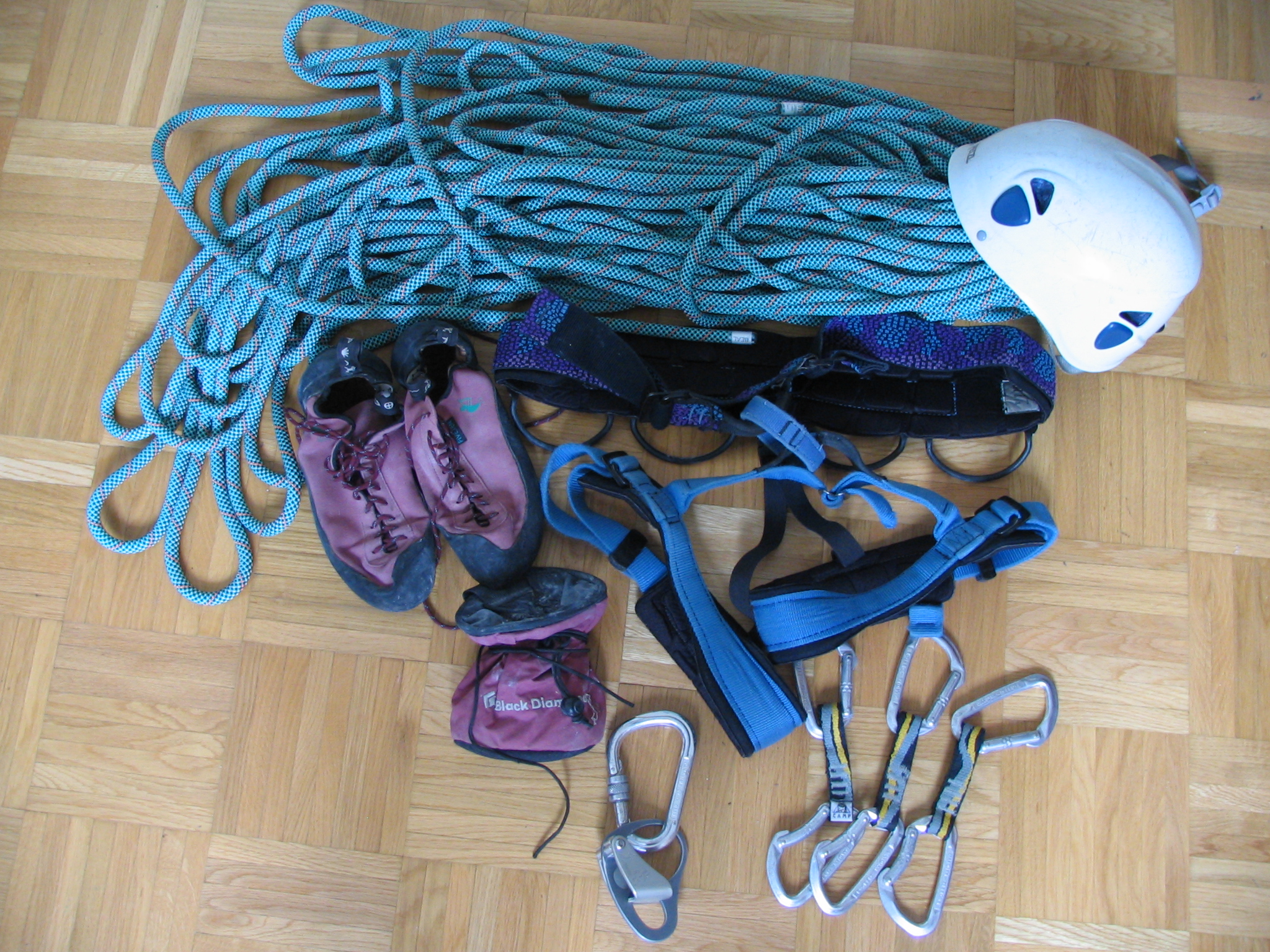
Helmets are not required for indoor climbing in Singapore. Gym walls are controlled environments with padded floors, and overhead hazards are not present. Ropes are provided by the facility. Carabiners and quickdraws are relevant only for outdoor sport and traditional climbing, which is outside the scope of gym use.
Crash pads, while essential for outdoor bouldering, serve no purpose in a gym where the entire floor area beneath the walls is already covered with thick, impact-absorbing matting.
Where to Buy in Singapore
Climbing gear can be purchased at dedicated outdoor retailers and at some gym shops. Notable retailers include:
- Campers Corner (multiple outlets)
- Decathlon Singapore (wide range of entry-level climbing shoes and accessories)
- Gym-operated shops at Boulder Movement, Climb Central, and Boulder+ (typically stock shoes, chalk, and accessories)
Related Reading
- Bouldering Gyms Worth Visiting in Singapore for gym-specific information including rental availability
- V-Scale, Font Scale, and Gym Grades Compared for understanding difficulty levels
- UIAA (International Climbing and Mountaineering Federation) for gear safety standards